Sub-contractor and Contract Management
Why, What, How?
Many projects rely on the supply of hardware, software,
facilities and services by various vendors or sub-contractors.
The Project Manager may need to:
The Project Manager has an important part to play - but
remember what you are not...
 You are not the right
person to enter into contractual relationships on behalf
of the organisation. It will usually be a senior manager
who is most appropriate and is authorised to agree the
terms and sign the contract.
You are not the right
person to enter into contractual relationships on behalf
of the organisation. It will usually be a senior manager
who is most appropriate and is authorised to agree the
terms and sign the contract.- You are not a lawyer. Although it is in your interest to
see that the deal meets your needs, use lawyers or other
specialists to determine the precise wording of the
contract.
There are many different situations
requiring contracts. Your approach may vary considerably. In
terms of scale, take a look at these examples:
- complete outsourcing of facilities and business
functions,
- outsourcing the development of a new IT system,
- sub-contracting the development of a specific component
of your new system,
- purchase of packaged software and on-going support,
- using consultants from a major consultancy firm,
- hiring a freelance programmer working as a contractor,
- additional licences for standard desktop software.
 Most people and businesses are reasonably honest.
They need satisfied customers to build their reputation and gain
future work. But some of them will bend the truth a bit if they
feel it is legitimate. We call such people "salesmen".
Most people and businesses are reasonably honest.
They need satisfied customers to build their reputation and gain
future work. But some of them will bend the truth a bit if they
feel it is legitimate. We call such people "salesmen".
For example, in a selection exercise if you ask the question
"is your system user friendly", you can guarantee they
will say "yes". It was not worth asking the question.
Worse than that, some vendors will use the word "yes"
to mean "yes - it could be done ... if we modify the system
for you". You need to probe for the truth and make sure you
leave no room for them to mislead you.
Watch out for the hidden extras. If the contract does not say
something is included you can guarantee an additional charge for
it. By then you will be tied into the relationship. You will find
you have a poor bargaining position when negotiating those
charges.
Beware of the sharks!
The process of selecting suppliers is the subject of detailed
methodologies. In the ePMbook we will only summarise the
considerations.
The style of selection will vary according to your needs and
environment. We saw above that there is a
large range of contractual situations to consider. The more
significant the contract, the more attention you are likely to
pay to the selection and procurement processes.
Styles also vary noticeably between the public and private
sector:
- In the public sector, the emphasis tends to be on
completeness and fairness. All potential vendors should
be identified and given an equal chance to win. Various
rules, norms, standards and legal requirements apply to
regulate the process. Certain types of purchase can be
made from standard approved suppliers without the need to
enter into a full selection process. Rules are also
relaxed for low-value contracts.
- In the private sector, the objective is usually to gain
maximum benefit. That might be achievable by making a
rapid choice from a small number of leading suppliers. It
might also be possible to partner with a single reliable
supplier. Selection exercises are used only where there
is a genuine need to search the marketplace for the best
supplier.
Start by defining what you need. Try to limit this to the
genuine business requirements. Do not make assumptions about the
solution nor add in unnecessary detail. To do so would restrict
the vendors' ability to propose the best overall solution to meet
your needs.
Make sure it is clear (both to yourself and to potential
bidders) which requirements are so vital that you could not
consider any proposal that failed to address them . If the vendor
can see that their proposal will be rejected, there is no point
in the bidder wasting their time or yours by responding to a
Request For Proposal. Be very careful, however, to restrict this
to absolute needs that could not be addressed some other way. It
is common for people preparing requirements documents to claim
many things are mandatory - only to change the rules when they
realise no vendor can do everything.
 In a classic selection process, these
requirements are used to formulate a Request For Proposal
(RFP) which will be issued to potential vendors. (Organisations
use many different
names for this concept - find out what language is
used in your organisation.) Each vendor will consider
their response. They will often need further interaction
with you to explore your precise requirements or explore
possible directions. (In the public sector scenario,
anything you tell a competing vendor must be relayed to
the others.) In a classic selection process, these
requirements are used to formulate a Request For Proposal
(RFP) which will be issued to potential vendors. (Organisations
use many different
names for this concept - find out what language is
used in your organisation.) Each vendor will consider
their response. They will often need further interaction
with you to explore your precise requirements or explore
possible directions. (In the public sector scenario,
anything you tell a competing vendor must be relayed to
the others.)After a reasonable period of time the
vendors submit the proposals to you for evaluation.
Before they arrive you should have taken the time to
define how you will assess the responses. Develop a
balanced view of the relative importance of various
requirements. Just because you asked 100 questions about
accounting and only 10 about the electronic storefront
does not mean the accounting issues outweigh the customer
perspective.
You will probably want to perform other investigations
to complement the information in the formal proposal. For
example, you might ask for demonstrations, interview
existing customers, investigate the vendor's financial
status and check their track record.
With a large number of potential vendors, it is common
to narrow the field in stages, maybe starting with a
Request for Information to arrive at a short list,
followed by the Request for Proposal, and then narrow the
field again before conducting detailed investigations.
|
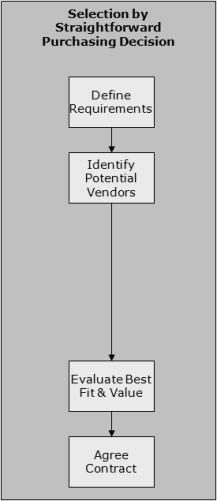 Where it is not necessary to make a
selection decision on the basis of formal tenders
received, it may be more efficient to study the vendors,
services and products available then make a
straightforward purchase decision. To do so, you would
need access to sufficient knowledge or information about
the competing options. Where it is not necessary to make a
selection decision on the basis of formal tenders
received, it may be more efficient to study the vendors,
services and products available then make a
straightforward purchase decision. To do so, you would
need access to sufficient knowledge or information about
the competing options.You might still approach several
vendors and request information, prices etc. The key
difference is that you collect the information you need,
then make a decision. You do not ask them to submit
formal bids against a specially prepared RFQ document.
Following your decision in principle, typically you
would still enter into negotiations with the vendor to
ensure you get a good deal that meets your needs and
avoids any contractual pitfalls.
The great advantage would be the time saving.
Preparing a formal RFP can often take several weeks. It
will take a further period of weeks for it to be received
by the vendors, studied, queried, and responded to. On
receipt of the vendors' proposals you might then spend
weeks reading, querying, investigating and evaluating the
detail.
This style of procurement is also the typical way you
would hire individuals as sub-contractors - for example
contract programmers. You would evaluate the individuals'
career histories and capabilities, interview them, then
attempt to come to mutually agreed terms with those that
you consider the most appropriate.
|
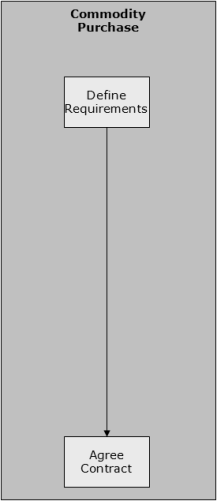 Where the contract concerns a commodity
item, you might pay even less attention to the choice of
item and vendor. If you need a projector, you might
simply find the nearest supplier and buy or hire one. Where the contract concerns a commodity
item, you might pay even less attention to the choice of
item and vendor. If you need a projector, you might
simply find the nearest supplier and buy or hire one.In
some cases, significant contracts can be handled in this
way, provided the content is subject to pre-existing,
approved purchase lists. For example, you might be able
to buy 100 PCs directly from an approved supplier or you
might be able to hire consultants through a framework
contract.
Even in such cases, you may need to consider the
detail of the contractual relationship. Unless the
transaction is a simple consumer purchase, you will need
to check the small print for warranties, terms and
conditions etc.
Be particularly careful if the minor components are
essential to your overall solution. For example, if your
design is based on a particular type of mobile device you
would not want to find that it ceases production shortly
after you have finished.
|
The role of the Project Manager is to ensure that the
negotiated deal best meets the project's needs. You should be
checking such things as:
- specifications,
- identification of all necessary components and work
packages,
- delivery dates,
- quality/acceptance criteria,
- guaranteed functionality,
- staffing levels,
- training provision,
- support arrangements,
- adequate resilience,
- guaranteed performance (speed),
- service levels.
There will also be the commercial arrangements to deal with.
You could try to negotiate a good deal on your own, but you will
probably do better if you use an experienced Purchasing Manager
or Buyer from your organisation.
Case Study
|
| "There are two types of customer -
those who pay the full price and those who know they can
ask for a discount. If they don't ask, we don't mention
it." - IT salesman
|
In commercial deals it is common to agree a discount against
the vendor's standard price. Strangely, not all purchasers
realise they can ask. There are some vendors who never discount
prices - but their salesmen will not think it strange of you to
ask. Often, the vendor will have a target price to achieve, a
standard price that is say 25% higher, but be willing to discount
say 25% lower to get the sale. That means you might get 40% off
the price you were originally told. The larger your organisation
and the larger your potential contract, the more bargaining power
you have. Even the strongest suppliers are willing to barter if
the deal is big enough.
The flexibility to discount will depend on what is being sold.
If it is software (excluding support and maintenance) the
marginal cost to the vendor might be the cost of a CD. Their
pricing will be designed to achieve a reasonable return on their
original investment overall, but a sale at any price will
increase their profit. If they are selling services, they could
discount down to the cost of service for their employees' time.
If they are selling hardware or selling on someone else's
product, they cannot go below cost price.
When discussing discounts, check what the discount applies to.
A good discount may be offered to the basic price, but that same
level of discounting might not be applied to other charges such
as training, consultancy, or maintenance. The non-discounted
elements might well be far more significant over a period of time.
Watch out for such other charges being expressed as a percentage
of the basic price. If annual maintenance is a percentage of the
standard purchase price it will cost you the full amount even if
the seller gives you a big discount off the price.
It may be unwise to negotiate too low a price. If the vendor
is not getting value from the relationship you might not get good
service and priority. If you are competing for optional resources
(eg a change in the specification or additional consultancy
advice), you might find that the vendor prefers to deploy
resources on other more-profitable customers.
You should anticipate the need to negotiate with your
suppliers at future points in the lifecycle. Where a key element
of your solution is involved you may find that your bargaining
power becomes progressively weaker the harder it would be to
change suppliers. Try to anticipate these needs and agree
favourable terms in advance - when your power is at its greatest.
Bargaining Power -
Buyer vs Supplier
|
 |
You should ensure that appropriate specialists deal with the
detailed terms and conditions. You should either be using
contract lawyers or a specialist unit within the organisation.
They should have experience of the type of relationship you are
dealing with - for example, not all lawyers will be familiar with
the pitfalls in contracting for packaged software.
Buyers and sellers usually have differing views on what makes
a good deal.
The buyer's dream deal?
|
|
The seller's dream deal?
|
- The supplier will provide everything the customer wants or
needs, whether or not they thought of it or subsequently
change their minds.
-
The supplier will ensure all things
work perfectly, whether or not they were provided by the
supplier, and that the overall solution will do
everything the customer wants or needs both now and for
an indefinite period into the future.
-
All employees of
the supplier are available 24 hours a day to provide
assistance and advice on any matter at no additional
charge.
-
Unlimited training will be available from the
supplier for an indefinite period.
-
The supplier hereby
assigns full ownership and intellectual property rights
in all items provided during the course of this
relationship.
-
The customer may make copies of all
materials supplied and provide these to anyone as they
see fit.
-
Any limits on usage cease to apply after
the contract is signed.
-
The customer need only pay what
they want to at whatever time they feel is appropriate,
and only when every element of the contract has been
accomplished to perfection.
|
|
- The supplier undertakes to make some effort to meet the
customer's needs but cannot commit to anything.
-
Items
supplied are not necessarily fit for purpose or of
merchantable quality.
-
The customer accepts that an
undefined number of faults will inevitably be contained
in the delivered items, and that the supplier can in no
way accept responsibility for these.
-
The supplier is not
obliged to remedy any faults nor provide any compensation
for anything whatsoever.
- Prices charged for the initial
items delivered may be increased at any time.
-
Any
discount offered only applies to the initial items
delivered.
-
Further purchases and recurring charges for
licences, services and maintenance etc will be charged at
the full list price at the date of renewal.
-
Charges for
any item the customer forgot to specify or requires in
the future which cannot be obtained anywhere else will be
charged at a special surcharge above standard list price.
-
The customer is hereby deemed to be happy and will be
featured in marketing and publicity materials.
|
 The detailed negotiation of contractual terms can be unexpectedly
frustrating and time consuming. It is easy to underestimate the
time and resources required. With significant contracts it is
important to get it right. You might take a softer view for minor
contracts, eg hiring a contract programmer for three months, but,
even then, you need to make sure the contract is sound. Would you
want that contractor to claim that he owns the software he wrote?
The detailed negotiation of contractual terms can be unexpectedly
frustrating and time consuming. It is easy to underestimate the
time and resources required. With significant contracts it is
important to get it right. You might take a softer view for minor
contracts, eg hiring a contract programmer for three months, but,
even then, you need to make sure the contract is sound. Would you
want that contractor to claim that he owns the software he wrote?
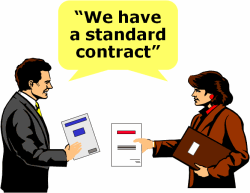
Vendors often have standard contracts. If you wish to
negotiate different terms it often involves lawyers from both
sides. Your organisation may have standard purchase contracts.
This can be the recipe for the most frustrating and time-consuming
legal negotiation.
The list below illustrates some of the types of issue which
should be considered when negotiating contracts for the supply of
computer hardware, software and services. It is not intended to
be a definitive or complete list. Parties negotiating contracts
should always consider the terms and conditions in depth and
obtain appropriate legal advice. No liability whatsoever can be
accepted for any errors or omissions in this list nor for any
adverse consequences of using it.
(Download in Word format)
Contract
Checklist
|
Contract
Attachments - various pre-contractual documents and
statements may be explicitly or implicitly included in
the contract (make sure their status is clear)
- Vendor correspondence
- Vendor literature and advertising
- Notes of meetings between vendor and client
- Materials from vendor demonstrations, such as
output reports
- Systems specifications
- The vendor’s financial statements
- All responses and other materials completed from
the Request for Proposal (RFP), including the
completed system requirements
- An Implementation Plan identifying the tasks to
be completed, the assigned responsibilities and
the scheduled completion dates
- Stated usage of named sub-contractors and
specific named employees
- Other vendor representations
|
Terms of Agreement
- Initial terms
- Optional terms
- Renewal terms
- Relationship with vendor's sub-contractors
- Terms and conditions for transfer of personnel (eg
with outsourcing contract)
|
Deliverables
- Design
- Hardware
- Networking provision, connectivity, ISP, portal
connectivity
- Access to servers and facilities not owned by the
client
- Software / programs
- Source code
- Programming and data standards (eg language,
database, XML)
- Modifications
- Custom programming
- Application / transaction / business process
outsourcing / facilities management services
- Supply of data and information
- Consultancy
- Support services
- Introduction of trading partners, suppliers,
customers etc
- Documentation
- Training
- Enhancements and updates
- Initial support and maintenance
- Continuing support and maintenance
- Backup, recovery and disaster recovery provision
- Access to information and electronic support
services
|
Delivery
- Timetable
- Delays (constituting contract default)
- Price reduction or penalty for delays (liquidated
damages)
- Actual-cost damages for defaults (and any limit
applied thereto)
- Trial period
|
Acceptance Criteria
- Thorough test data
- Functional tests
- User Acceptance Tests and criteria
- Integration tests and compatibility with
connected systems including those of other
partner organisations, customers and suppliers
- Performance tests
- Reliability tests
- Throughput / transaction times
- Run time
- Computer resources required
- Efficiency
- Standards of continuing performance
- Acceptance period
- Terms for operation where there are outstanding
problems and no user final acceptance
|
Use and Ownership
of Software, Hardware and Services
- Unlimited use
- Use by or extension to associated companies in
same group, outsourcers, sub-contractors,
customers, suppliers, other third parties
- Use and ownership of software on transfer of the
business to new owners
- Ability to assign rental, maintenance and service
contracts to new owners
- Continuing use of systems and provision of
services if the business is placed into
administration due to insolvency
- Upgrades and portability of software for client's
future use
- Ownership of software customised to client's
specifications
- Client's right to modify software package
- Effect of refusal of future modifications if
unacceptable
|
Source Programs
- Access by client and sub-contractors to source
programs
- Undertaking to maintain open source
- Source code and program documentation in escrow
|
Installation and
Training
- Timeframe of installation
- Amount of disruption to client's operations
- Minimum hardware and software configuration to be
provided by client for vendor's hardware and
software to operate upon or in conjunction with
- All appropriate education required by client to
successfully implement and operate system
- Period of time that training will be available
- Training location
- Training costs
- Training curriculum
- Facilities required to provide training
|
Support and
Maintenance
- Amount and nature of implementation support at no
additional cost
- Cost of annual maintenance
- Guaranteed prices and nature for specified period
- Starting time for maintenance (eg after warranty
period)
- Support the vendor can provide in the event of a
disaster
|
Warranties of
Vendor
- Commencement event of warranty period (installation,
acceptance, etc.)
- Suitability of software for client's requirements
- Compliance with legislation and regulatory
requirements (eg accounting standards, employment
legislation, data privacy / protection, use by
the disabled, access to data by authorised public
bodies)
- Capacity to handle stated volume of transactions
- Ownership of software and hardware
- Vendor's right to license software
- Assurances regarding infringement
- Period of time vendor will keep software
operational
- Correction of malfunctions
- Willingness to allow changes in the
specifications or deliver additional items (subject
to agreed terms and charges)
- Equipment configuration required for software
- Vendor's commitment to software and/or hardware
maintenance
- Guarantee of support availability
- Service levels
- Call out times
- Escalation procedures
- Items explicitly or implicitly included or
excluded from warranties (does itemisation of
included items imply exclusion of anything else -
"reverse limitation")
- Definition of basis for compensation and limits
applied (eg contract price, actual damages,
liquidated damages, capped limits, fault / no-fault,
force majeure, opportunity to cure, time and
notice requirements)
- Definition of limits of accountability where
parts of the overall solution are provided by the
client or by other parties
|
Client's Rights and
Safeguards
- Right to reproduce or otherwise make available
reference documentation
- Right to disclose software to others
- Right to rescind agreement at any time prior to
acceptance of system
- Right to terminate agreement, optionally with
agreed notice period or at defined break points
- Right to transfer software with sale of computer
- Right to modify software
- Right to merge software into other program
material
- Right of assignment
- Right to outsource
- Product liability insurance
- Performance bond
|
Confidentiality
- Client data
- Client's business methods and trade secrets
- Vendor-related information that is subject to non-disclosure
|
Infringement
Provisions
- Vendor defends any suit brought against client
- Vendor pays costs and damages
- Vendor replaces infringing software
- Vendor indemnifies client for loss
|
Events Constituting
Default
- Failure to deliver
- Failure of software or hardware to perform
according to specifications
- Unreliability of software or hardware
- Failure of vendor to correct malfunctions within
an agreed-on time period
- Failure of vendor to provide support services
- Bankruptcy of vendor
|
Default and
Malfunction Remedies
- Termination of agreement
- Recovery of damages for costs incurred
- Liquidation of damages
- Refund of money paid and costs incurred
- Replacement of software or hardware by vendor
- Repair of software or hardware by vendor
- Payment by vendor for cost of repairing or
replacing software or hardware by others
- Downtime credits
- Backup facility in the event of malfunction
- Time to correct malfunctions, which extends the
warranty period
|
Price
- Fixed cost
- Time and material costs
- Rental basis
- Pricing basis and parameters eg per "seat"
/ by processor size / per transaction or event
- Optional and call off-charges (eg consultancy
advice per day)
- Pricing of subsequent variations to the
contracted specification and other additional
work
- Renewal costs
- Other charges
- Quantity discounts (eg multiple or subsequent
installations, reduced day rates after given
number of days)
- Agreed discounts apply to which prices and
charges (eg all elements discounted by agreed
amount, or only the basic price is discounted
with other charges based on full standard price)
- Price protection for future enhancements and
support
- Pass through of future price reductions
- Pricing for upgrades or trade-in's
- Lease payments applied to purchase
- Charges or penalties for early termination (in
the absence of default)
|
Payments
- Fixed dates
- Progress payments based on defined acceptance
criteria
- Credit for delays
- Refund of money if agreed-on situation occurs
- Holdback
- Periodic payments and royalties
- Maintenance fees
|
Taxes
- Liability for taxes
- Place of contract - country / state taxes that
apply
- Tax credits
|
Client-Vendor Relationship
- Vendor's status (eg independent contractor, not
employee of client)
- Risk and reward sharing
- Vendor and/or third-party funding of capital
requirements
- Creation of new legal entities to manage joint-venture
relationships and partnerships
- Prohibition against assignment by vendor
- Prohibition against sub-contracting by vendor
without client's consent
- Continuity during dispute
- Personnel recruitment policy - anti-poaching
agreement
- Use of client's resources by vendor - eg office
facilities, access to site, computers, software
|
Other Considerations
- Free trials or demonstrations
- Compensation for assisting vendor in developing
or testing software
- Intellectual Property Rights - who owns anything
created for the client (eg source code, text,
images, information)
- Publicity and endorsements, eg right to refer to
other party's name or situation in published
materials
- Confidentiality during disputes / commitment not
to make derogatory public statements
- Arbitration
- Termination procedures
- Terms and conditions for subsequent transfer or
return of outsourced systems, personnel and
services on termination of contract
- Inclusion of all side agreements in contract
|
How do legal contracts (and checklists) get to be so
complicated? Every time someone trips over a new problem they
write a new condition to make sure it will not go wrong next time.
If you have any other contractual issues to add - please send us
your feedback.
Sub-contracted work and the delivery of specific components
often relate to specific phases of the project. At the start of
each phase, check the relevant components and contracts are in
place and will meet your impending needs.
The detailed planning for the phase may be impacted by the
specific choices you have made. Ensure that the plan reflects the
final decisions about purchased components, sub-contractors and
contracts.
External sub-contractors need to be mobilised in much the same
way as the internal project staff:
- make sure they are lined up to arrive as required
- provide appropriate briefings and induction
- make sure they feel part of the team and share your
enthusiasm for success.
Where external components are being delivered, make sure your
internal resources are prepared to receive them in a timely
manner.
During the project, the team needs to
monitor the compliance of vendors and sub-contractors. They must
ensure the goods or services supplied are acceptable. This needs
to feed into the controls in the procurement process.
Where sub-contracted project personnel are involved, conduct a
regular review of performance and compliance. With supplied
items, conduct the appropriate degree of testing and check that
they meet the agreed specifications.
Changes
in the project's needs are inevitable. The Project Manager
will often need to negotiate changes when the organisation
requires new or changed deliverables from the vendor. This may be
the situation the vendor has been hoping for. They might make up
for a low initial bid price by charging large amounts for changes
to the specified deliverables at a time when you have little
alternative but to agree. Hopefully, you will have anticipated
this and agreed appropriate terms and charges in the original
contract.
Throughout the project you should
maintain a good working relationship with your suppliers and sub-contractors.
Your success will depend on their continuing co-operation. A
vendor or sub-contractor will expect to be paid in accordance
with the agreement. Ensure that they are paid promptly, provided
they have performed in accordance with the agreement.
In almost all relationships there will
be disputes & wrangles. The Project Manager should have
developed a good relationship with the management of major
suppliers so that problems can be settled rapidly without
becoming contractual disputes. There is a natural tension between
you, the customer, wishing to get the most benefit from the deal
and the supplier who will wish to maximise profits. Normally you
can agree a reasonable compromise before calling the lawyers.
Some relationships deteriorate into a "cash-back"
mentality. The parties focus on faults and contractual
compensation payments instead of the well-being of the business
solution. Ideally, all parties should make the success of the
solution their top priority.
If the dispute does need to be escalated, you would normally
look to your senior management raising the issue with the senior
management of the vendor. Most vendors will have an escalation
process - try to accelerate your priority in it. Only as a last
resort should you threaten a legal dispute. It usually costs far
more than it is worth, can cause huge delays, may lead to the
withdrawal of key elements of your solution, and may lead to sour
relationships during subsequent operation and enhancements of the
system.
There may sometimes be a problem identifying who is to blame
for a problem. Where several parties and components are involved
it is common to find each vendor points the blame at the others.
If, for example, data on a customer's screen was wrong, was that
our data, our software, our hardware, the operating system we
bought, our communications network, the purchased communications
management software, the Internet Service Provider (ISP), the
public telecommunications system, the user's ISP, the user's
modem, their PC or their software? Where possible, try to route
sub-contracted elements through a prime contractor so that it is
clear (from your perspective) that the problem is their problem.
The project's quality management
processes should ensure that sub-contracted work and
deliverables meet the agreed standards. These controls should be
tied into the contractual payment terms.
The contract should have defined the procedures and terms for
any remedial work that is required in the event of non-compliance.
Provided the deliverables are accepted, ensure the vendor is
paid promptly, and, where appropriate, thanked for their
contribution.
At the end of the project you need to finalise the
relationship with your sub-contractors:
- Inform the supplier about the people who will represent
your organisation once the project team is demobilised -
eg the operational management, support and technical
contacts.
- Make sure all final deliverables have been completed
acceptably.
- Make sure any on-going support, maintenance and
warranties are in place.
- Make any final payments.
- Communicate that the project has finished.
In many cases you might have completed the project and started
live operations but still have a list of minor problems or
concerns that need to be addressed. You might agree to retain
some of the final payment pending full satisfaction.
You may agree to provide customer references for a vendor or
sub-contractor. Many suppliers will wish to publicise their
success, publicly naming your organisation and describing your
project. They might wish to publish quotes from named individuals.
They might seek permission for you to be contacted if other
prospective customers want to speak to previous clients. In
general it is useful to maintain good mutual relationships with
your suppliers, but be sure anything you agree is in line with
your organisation's policies. You do not have to co-operate if
you feel it is inappropriate. Be careful not to give any
opinions, advice, endorsements or information that might make you
or your organisation legally liable for damages should it prove
to be false. If you say a sub-contractor was good - you could be
sued by someone who relied on that opinion and found them to be
bad. If you say a sub-contractor was bad - you could be sued by
the sub-contractor for damage to their business. Stick to the
facts!